Updated: July 2026
Bali Luxury Safari — Bali Elephant Encounter — Ethical Tour at…
Bali Luxury Safari is a curated Indonesia luxury tourism experience offered by Bali Luxury Safari Atelier: handpicked routes, vetted operators, transparent pricing, and 24/7 concierge support across Indonesia.
- What makes Bali Luxury Safari a premium experience.
- How Bali Luxury Safari Atelier curates exclusive access and concierge logistics.
- Routes, seasons, and pricing transparency — no hidden fees.
Bali elephant encounter — what an ethical visit actually looks like.
Why we use Mason Adventures Elephant Park near Ubud, what their welfare protocols cover, and the questions every traveller should ask before any elephant interaction in Indonesia.
 Bali“/>
Why this is the longest piece on the site
Elephant tourism in Indonesia is the most scrutinised category of wildlife travel and it deserves to be. Three operational realities frame the topic. First, the Sumatran elephant is critically endangered and the population is shrinking by an estimated three percent annually due to habitat loss. Second, captive elephants in Indonesia mostly cannot be returned to the wild because their habitat is fragmented or destroyed, so a sanctuary life is the realistic outcome for rescued individuals. Third, welfare protocols vary dramatically across operators in Bali — some still run riding programmes, some chain animals overnight, and some operate without independent welfare audits. Choosing the right operator matters more than choosing the right villa.
Why we use Mason Adventures Elephant Park
Mason Adventures runs the longest-operating ethical elephant programme in Bali, near Taro village forty minutes north of central Ubud. Their herd consists of Sumatran elephants rescued from logging camps and habitat-loss situations decades ago — animals that cannot be repatriated. The park covers about fourteen hectares of forest with a freshwater bathing pool. The welfare framework is what we evaluate, not the marketing brochure, and the four protocols we verified before adding them to our menu are: no chains overnight, no tourist riding, mahout-to-elephant ratio of one to one with twenty-four-hour care, and external welfare audits with public results.
What the morning interaction looks like
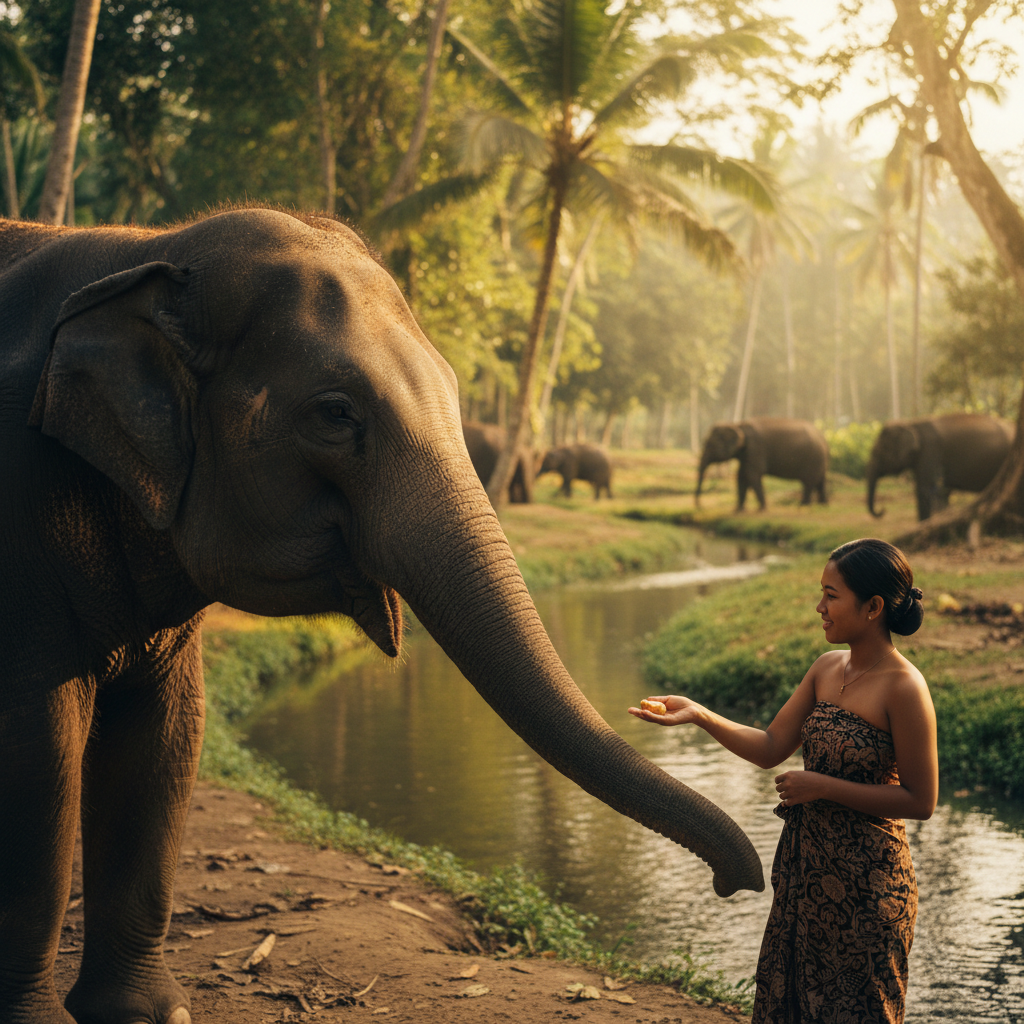
A guest morning at Mason starts with a welfare briefing — the rescue history of the herd, why riding is not on the menu, and how the day will run. The interaction itself is in three parts. Part one is feeding — guests hand-feed the elephants pre-prepared fruit at a feeding rail. Part two is walking — guests walk alongside an elephant and its mahout through the park’s forest paths, with the mahout setting the pace. Part three is the river bath — the elephants choose to enter the freshwater pool and guests assist with bathing using brushes and water buckets, with mahouts ensuring the elephant’s consent at every step. There is no riding. There is no staged photography on a chained elephant. Lunch is at the on-site restaurant overlooking the elephant pool.
Why riding programmes are off our menu
Tourist riding requires a saddle structure and a training process that veterinary welfare bodies have repeatedly characterised as harmful to the elephant’s spine and stress levels. Independent welfare frameworks — including those summarised in the Wikipedia overview of Mason Adventures and the welfare guidelines published by international animal welfare bodies — recommend walk-alongside and bath interaction over riding for any captive Asian elephant. Mason removed riding from their menu years ago. We removed every Bali elephant operator that still rides from our partner list at the same time. There are no exceptions on our itinerary.
Questions to ask any elephant operator before booking
Five questions cover the welfare basics. One — do the elephants have access to a freshwater bathing pool every day? Two — are the elephants chained overnight or do they move freely in a forest enclosure? Three — what is the mahout-to-elephant ratio? Four — is there a riding programme on the menu and if so, does the operator allow welfare auditors to observe it? Five — can the operator name the rescue origin of the herd? An operator that cannot answer these directly is not running a sanctuary; they are running a transactional photo opportunity.
Where the Mason morning fits in the multi-day
In our signature multi-day safari experience the Mason morning is day three. We deliberately split it from the safari day because both are full-energy mornings and stacking them creates fatigue. Day three runs Ubud-Mason-Ubud with a rice-paddy lunch and an in-villa afternoon. Honeymoon guests on a longer week often add the Mason morning as a day-only experience without the full safari park visit. Our private villa with safari package guide covers the villa-side logistics.
A note on conservation context
The Sumatran elephant is listed as critically endangered on the IUCN Red List and the population trend is downward. Sanctuary tourism is one of the few funding streams keeping rescued individuals fed and medically cared for. Bali’s elephant population is entirely captive and rescued — there are no wild elephants on the island. Visiting an ethical sanctuary is a meaningful contribution to the operating cost of caring for these animals. Visiting a riding camp is the opposite. The choice is exactly that simple.
Book the Mason Adventures elephant morning
Ethical encounter, no riding, walk-alongside and river bath, 14-hectare forest sanctuary.
Beyond elephants: Bali’s broader biodiversity and ethical considerations
The scent of frangipani blossoms mingles with the salty air as you journey deeper into Bali’s verdant heart, revealing an island rich in ecological wonders far beyond its majestic elephants. While their ethical treatment remains a cornerstone, Bali’s unique position on the biogeographical Wallace Line demands a broader, equally conscientious approach. This invisible boundary, theorized by Alfred Russel Wallace in the 19th century, separates Asian and Australasian fauna, gifting Bali with a fascinating array of endemic species.
A luxury safari here extends its ethical lens to protect this delicate balance. Our curated experiences encompass the vibrant marine ecosystems surrounding Nusa Islands, where responsible snorkeling safeguards coral reefs and manta rays. We also consider West Bali National Park, home to the critically endangered Bali Starling. Every interaction, from observing rare birds to exploring ancient temples, contributes positively to local conservation and community well-being, woven into every facet of your journey.
Crafting your bespoke ethical itinerary: More than just elephants
Crafting a truly bespoke Bali luxury safari means curating experiences that resonate with your personal passions while upholding the highest ethical standards. Beyond the profound elephant encounters, our itineraries unlock exclusive access to the island’s rich tapestry of culture, conservation, and natural beauty. Imagine a private audience with a master silversmith in Celuk, learning about sustainable artisanal practices that have supported generations of Balinese families.
Or perhaps a sunrise trek through the UNESCO-listed Jatiluwih rice terraces, where you witness the ancient Subak irrigation system, a testament to Bali’s harmonious relationship with its land. These immersive experiences foster genuine connection and understanding. We partner with local guides and community initiatives, ensuring your investment directly benefits the people and places you encounter, fostering economic empowerment and preserving cultural heritage.
The Condé Nast Traveler standard: Vetting ethical luxury
At Condé Nast Traveler, our reputation for curating unparalleled luxury experiences is matched only by our unwavering commitment to ethical tourism. When vetting partners for a Bali luxury safari, our criteria extend far beyond opulent accommodations and seamless logistics. We delve deep into their operational philosophies, scrutinizing everything from animal welfare protocols across all species to fair wage practices for local staff and genuine community engagement.
This rigorous due diligence ensures every aspect of your journey aligns with global best practices for responsible travel. We confirm that any wildlife interaction strictly adheres to “no touch, no feed, no chase” principles. Our partners must demonstrate transparent environmental management plans, including waste reduction and water conservation. The Condé Nast Traveler stamp signifies an extraordinary journey undertaken with integrity and respect, supported by our 24/7 concierge.